
Curriculum and Assessment Review
The (Positive) View from Maximum Classics HQ
Like the rest of the education community in England, I was eagerly awaiting the publication of Prof. Becky Francis’ Curriculum and Assessment review this week. And I liked what I saw. From the perspective not as an educational professional but as a parent, I cheered when I saw the support given by the review to critical thinking, media literacy and financial learning. But then, with my professional hat on, I focused my attention on the implications for Primary languages. Here are my thoughts on the review’s findings and recommendations, and the implications for schools teaching or planning to teach the Maximum Classics course (spoiler – it’s all good!).
 In considering the role of language teaching at primary as a foundation for secondary learning, the review explores the single language model across LAs/MATs. However, it doesn’t draw any firm conclusions (data is based on one study in Hackney). Arguably, Latin is an alternative to the single language model as it provides the vocabulary and grammar learning foundations for the learning of any language, especially romance languages. Our experience working with MATs to deploy the Maximum Classics course does support the idea that a co-ordinated approach is useful for teacher confidence and student progress, regardless of what language students will study in KS3 and beyond.
 The review also highlighted the need for core content and standardised progression markers for French, Spanish and German (these are the top three languages taught in UK Primary schools, followed by Latin in fourth place). Creating a standardised curriculum for languages creates its own challenges and may well take time. Progression (and systematic monitoring) is embedded within the MC curriculum. The criteria for the pace of progression in MC is deliberately designed so that schools can proceed at the pace that is right for their pupils. In many ways, NOT being one of the languages for which the DfE may create progression targets is a benefit, allowing more school autonomy.
Zooming out, and looking at the guiding principles and aims stated at the top of the review, there is so much that we at MC HQ agree with. All of the following are beliefs at the core of all that Maximum Classics seeks to offer and achieve. Let’s go through them.
 “It is essential that more children and young people build strong foundations and a love of learning in the primary years, embarking on their secondary education with their literacy and numeracy secure, and with knowledge, confidence and enthusiasm sparked for other subjects.”
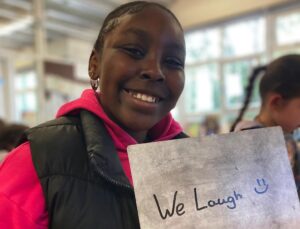
‘Love of learning’ is critical. Sparking curiosity, allowing children space to explore, giving them appropriate and accessible tools to do so, taking an inclusive approach – all of this is core to what we do.
“Evidence supports the need to build secure foundations and mastery of key subject concepts to raise standards and enable the development of expertise.”
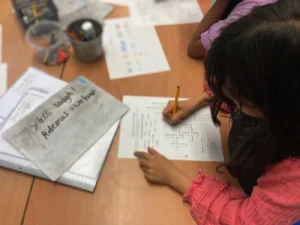 Music to our ears. If you teach the MC programme, you’ll know that mastery (and the repetition needed to achieve it) is a pillar of our course. Manageable amounts of vocabulary. A whole unit on one grammar concept. Concepts revisited in various ways. But arguably even more important is the mastery of language meta-skills, such as making etymological links between languages, or learning the art of using reference resources.
“Curriculum coherence should be an organising principle for curriculum drafters and support the selection and prioritisation of content. Where appropriate, vertical core concepts on which subjects have been constructed should be clearly presented, and horizontal coherence should be ensured.”
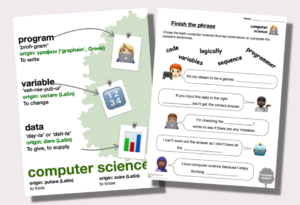 What we especially like here is the notion of ‘horizontal coherence’. Many of the schools we work with tell us that they love bringing the word roots concept into all areas of their curriculum. English and literacy benefit from learning Latin, for sure, but there are also links to science, maths, history, geography, art & design. All of these cross-curricular links are explored throughout the MC course. In fact, as All Saint’s Junior School, Reading (one of our partner schools) recently told us, “Maximum Classics really is the glue that holds our whole curriculum together.”
The paragraph that put the biggest smile on our faces?
“The refreshed national curriculum must be an aspirational, engaging and demanding offer that reflects the high expectations and excellence our young people deserve, irrespective of background.”
Yes! Let’s give all pupils – and their teachers – the highest-quality tools and the best support for the outcomes that they all deserve.
Charlie Andrew, Director, Maximum Classics CIC
If you like this...
…take a look our lessons on other aspects of the ancient world
…explore the ancient roots of the English language
…discover the fun and usefulness of learning Latin